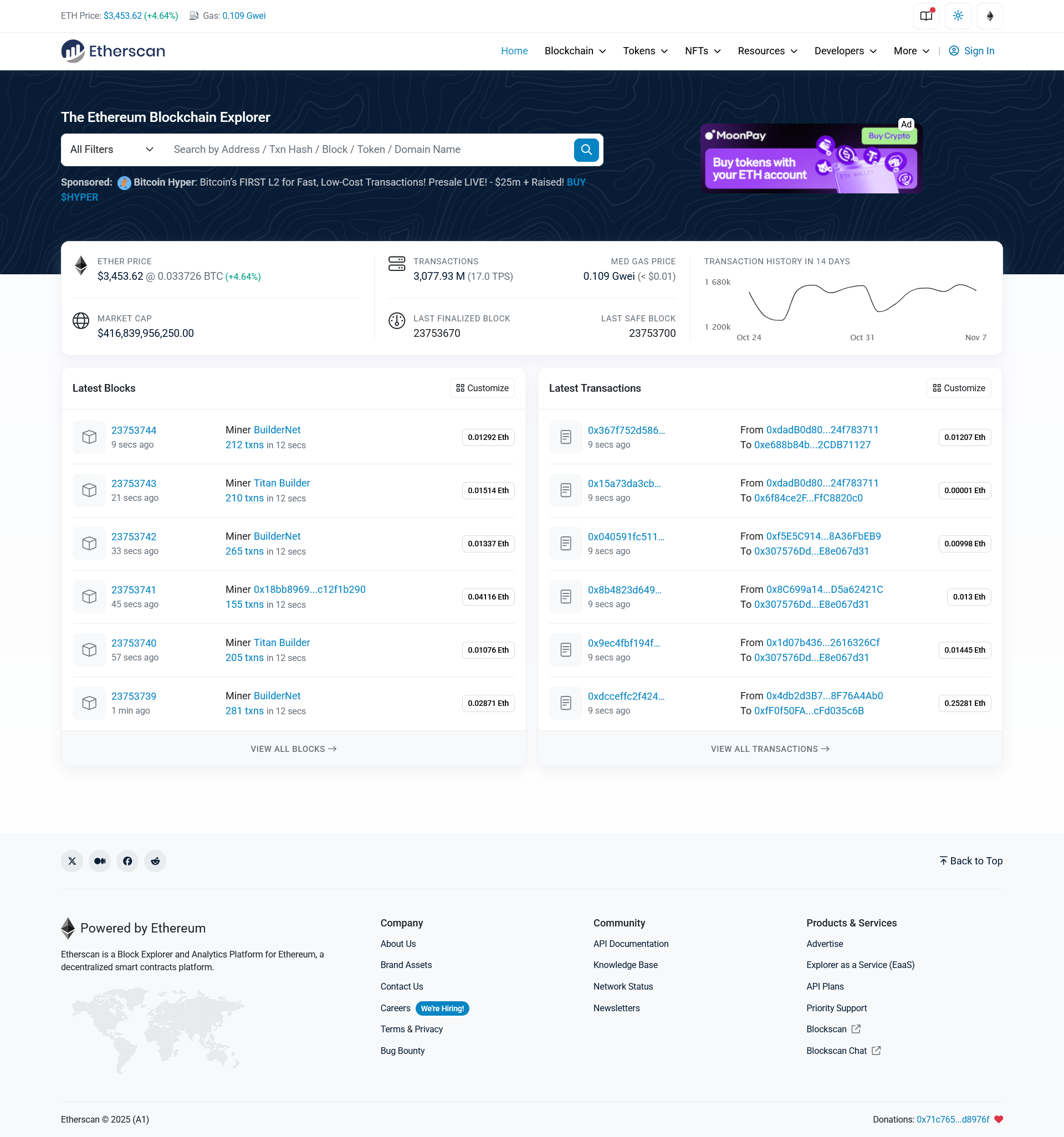
Etherscan: The Essential Explorer of the Ethereum Blockchain :-
Introduction ;-
As blockchain technology continues to grow, transparency and accessibility have become key pillars of trust. In the Ethereum ecosystem, Etherscan plays a vital role by allowing anyone to explore, verify, and analyze blockchain activity in real time. Often described as a “blockchain explorer,” Etherscan is an indispensable tool for developers, investors, and everyday users of Ethereum.
What Is Etherscan ?
Etherscan is a blockchain explorer and analytics platform specifically designed for the Ethereum network. Launched in 2015, it enables users to search, view, and verify transactions, wallet addresses, smart contracts, tokens, and blocks recorded on Ethereum’s public ledger.
Importantly, Etherscan is not a wallet and does not store private keys or control funds. Instead, it acts as a read-only interface that makes Ethereum data human-readable.
Key Features of Etherscan :-
1. Transaction Tracking :-
Users can look up any Ethereum transaction by entering a transaction hash (TXID). Etherscan displays:
. Sender and receiver addresses
. Amount transferred
. Gas fee paid
. Block confirmation status
. Timestamp
This feature is widely used to confirm payments, NFT transfers, and DeFi interactions.
2. Address Lookup :-
By searching a wallet address, users can view:
. ETH balance
. Token holdings (ERC-20, ERC-721, ERC-1155)
. Transaction history
. Interactions with smart contracts
This transparency helps users audit activity and track their own funds.
3. Smart Contract Verification :-
Etherscan allows developers to verify smart contract source code, enabling anyone to inspect how a contract works. Verified contracts improve trust and security, especially in DeFi projects where hidden logic can be risky.
4. Token and NFT Explorer :-
Etherscan provides detailed pages for:
. ERC-20 tokens (e.g., stablecoins, governance tokens)
. NFTs and collections
. Token holders and transfer history
This helps users research projects and detect suspicious token behavior.
5. Gas Tracker :-
Ethereum transaction fees fluctuate based on network demand. Etherscan’s Gas Tracker shows real-time gas prices, helping users choose optimal fees and avoid overpaying during congestion.
Why Etherscan Is Important :-
Etherscan strengthens Ethereum’s core value of transparency. Because all blockchain data is public but complex, Etherscan bridges the gap between raw blockchain data and everyday users. It is widely used to :
.Verify transactions without trusting intermediaries
. Investigate scams or suspicious activity
. Research DeFi and NFT projects
. Debug smart contract interactions
For developers, it also serves as a debugging and analytics tool during deployment and testing.
Etherscan and Security :-
While Etherscan itself is secure, users must be cautious:
. Never connect your wallet to fake Etherscan websites
. Do not share private keys or seed phrases
. Be wary of scam tokens or phishing links shown in transaction notes
Etherscan provides warnings and labels for known malicious addresses, helping users stay safer.
Limitations of Etherscan :-
Despite its usefulness, Etherscan has some limitations:
. It does not reverse transactions
. It cannot recover lost funds
. Data interpretation can be confusing for beginners
However, these limitations stem from Ethereum itself, not Etherscan as a platform.
Conclusion ;
Etherscan is one of the most important tools in the Ethereum ecosystem. By making blockchain data transparent, searchable, and understandable, it empowers users to verify information independently and trustlessly. Whether you are a developer, investor, or casual user, understanding how to use Etherscan is a fundamental skill in navigating the world of Ethereum and decentralized finance.